Narratives describing the progression of math topics throughout the grades:
http://ime.math.arizona.edu/progressions/
Monday, July 1, 2013

Math Model Curriculum
The Ohio DOE has created model curriculum for each grade level. Here are links to 3rd and 4th grade:
http://education.ohio.gov/getattachment/Topics/Academic-Content-Standards/Mathematics/Grade-3-Model-Curriculum-for-Mathematics-pdf-1.pdf.aspx
http://education.ohio.gov/getattachment/Topics/Academic-Content-Standards/Mathematics/Grade-4-Model-Curriculum-for-Mathematics-pdf-2.pdf.aspx
And the general resource website (with these links):
http://education.ohio.gov/Topics/Academic-Content-Standards/Mathematics
http://education.ohio.gov/getattachment/Topics/Academic-Content-Standards/Mathematics/Grade-3-Model-Curriculum-for-Mathematics-pdf-1.pdf.aspx
http://education.ohio.gov/getattachment/Topics/Academic-Content-Standards/Mathematics/Grade-4-Model-Curriculum-for-Mathematics-pdf-2.pdf.aspx
And the general resource website (with these links):
http://education.ohio.gov/Topics/Academic-Content-Standards/Mathematics
CCSS Math Curriculum Maps
CCSS Toolbox has sequenced units for all grade levels aligned to the Core.
http://www.ccsstoolbox.com/
http://www.ccsstoolbox.com/
Wednesday, June 12, 2013

Tuesday, May 7, 2013
Nonfiction and the CCSS
The School Library Journal links 20 outstanding nonfiction titles to specific Common Core standards: http://www.slj.com/2013/05/standards/common-core/20-outstanding-nonfiction-books-core-essentials/#_
Thursday, May 2, 2013
Nonfiction Resources
I highly recommend the following professional resources for increasing the quality of nonfiction reading and writing instruction in the classroom:
 |
| http://www.amazon.com/Place-Wonder-Reading-Writing-Nonfiction/dp/1571104321 |
 |
| http://www.amazon.com/Make-Real-Strategies-Success-Informational/dp/0325005370 |
 |
| http://www.stenhouse.com/shop/pc/viewprd.asp?idProduct=9535 |
The Learning Network Blog on NYTimes

http://learning.blogs.nytimes.com/
Scholastic Common Core Resources
Scholastic has created a website full of free resources about the Common Core. The materials provide a good introduction to the Core and some ideas about beginning to shift practice.
http://www.scholastic.com/commoncore/common-core-free-resources.htm
http://www.scholastic.com/commoncore/common-core-free-resources.htm
Common Core Concerns and Answers

http://www.scholastic.com/teachers/article/your-core-concerns
Professional Development: It's Time for Change
This article from the NEA suggests that PD should come from within the knowledge bank of teachers at a school, be sustained, include job-embedded collaboration, and focus on student results. The article includes a discussion of PLCs.
http://www.nea.org/home/55173.htm
http://www.nea.org/home/55173.htm
Fluency Protocol
I've attached a link to a fluency protocol that has been successful in my classroom. The attached passages are taken from popular trade books, allowing for comprehension work to dovetail with the fluency practice. I have found success choosing passages that are at a frustration level for students, because you read the passage so many times. I have also found success with sending passages home with students as part of their 10 minutes of reading homework.
http://coedpages.uncc.edu/bric/fluencypartnerpracticeprogram.pdf
http://coedpages.uncc.edu/bric/fluencypartnerpracticeprogram.pdf
Wednesday, May 1, 2013
New York State Common Core Sample Questions
There is some controversy about how appropriate the chosen texts are (Tolstoy for 3rd Grade), but nonetheless, here is another take on questions that try to approach the intent of the CCSS:
http://www.p12.nysed.gov/assessment/common-core-sample-questions/
http://www.p12.nysed.gov/assessment/common-core-sample-questions/
Professional Learning Communities
What is a professional learning community?
http://www.allthingsplc.info/pdf/articles/DuFourWhatIsAProfessionalLearningCommunity.pdf
and more info on PLCs:
http://www.allthingsplc.info/
http://www.allthingsplc.info/pdf/articles/DuFourWhatIsAProfessionalLearningCommunity.pdf
and more info on PLCs:
http://www.allthingsplc.info/
Dynamic Learning Maps
The alternate assessment for the CCSS that is begin developed for students with significant cognitive disabilities is called Dynamic Learning Maps. This assessment will involve ongoing embedded assessment within the instructional plan. Here is a video that explains Learning Maps:
And here is a link to the website:
http://dynamiclearningmaps.org/
And here is a link to the website:
http://dynamiclearningmaps.org/
Webinars About the Common Core
Pearson has archived webinars about the Common Core on their website:
http://commoncore.pearsoned.com/index.cfm?locator=PS1sF6
http://commoncore.pearsoned.com/index.cfm?locator=PS1sF6
Acheivethecore.org
www.achievethecore.org has professional development resources, lesson plans, and other Common Core Resources, especially around text-dependent questioning.
Literacy Coaching Clearinghouse Tools
Need to stay organized? Need a calendar? survey? planning form for coaching? You can find everything here:
http://www.literacycoachingonline.org/tools.html
Literacy Coaching Clearinghouse Briefs
Literacy Coaching Clearinghouse has compiled briefs about topics of interest to literacy coaches. Find them here:
http://www.literacycoachingonline.org/briefs.html
These articles are a good read:
Do's and Don'ts for Literacy Coaches:
http://www.literacycoachingonline.org/briefs/DosandDontsFinal.pdf
Do work first to create a relationship of trust, recognize and appreciate differences, recognize your own beliefs and attitudes about teaching and learning, let the data lead, be a learner...
Don't take it personally, act like the "expert," avoid the tough issues....
and many more!
and
Considering Coaching Responsibilities in Terms of Teacher Change
http://www.literacycoachingonline.org/briefs/coaching_trajectory_a_smith.pdf
This brief explains that coaching falls into two areas: mentoring and advocacy.
http://www.literacycoachingonline.org/briefs.html
These articles are a good read:
Do's and Don'ts for Literacy Coaches:
http://www.literacycoachingonline.org/briefs/DosandDontsFinal.pdf
Do work first to create a relationship of trust, recognize and appreciate differences, recognize your own beliefs and attitudes about teaching and learning, let the data lead, be a learner...
Don't take it personally, act like the "expert," avoid the tough issues....
and many more!
and
Considering Coaching Responsibilities in Terms of Teacher Change
http://www.literacycoachingonline.org/briefs/coaching_trajectory_a_smith.pdf
This brief explains that coaching falls into two areas: mentoring and advocacy.
Literacy Design Collaborative Templates

LDC has templates for creating higher level thinking tasks. Rubrics are also included. Here's a link to the Elementary Templates:
http://www.literacydesigncollaborative.org/wp-content/uploads/2012/10/LDC-Elementary-Template-Tasks-v1.pdf
Reading and Writing Project CCSS Videos
Pathways to the Common Core - by the Reading and Writing Project

These videos show what Common Core looks like in the classroom.
http://vimeo.com/tcrwp/albums

These videos show what Common Core looks like in the classroom.
http://vimeo.com/tcrwp/albums
SBAC Sample Items

http://dese.mo.gov/divimprove/assess/sbac.html#sbacsample
This a great resource for becoming familiar with DOK and the Common Core
Tuesday, April 30, 2013
From the Met Life Teacher Survey....
"The survey underscores the fact that teachers today play a key part in the leadership of their schools. Half of teachers now function in formal leadership roles such as department chair, instructional resource, teacher mentor, or leadership team member. These teacher leaders are more likely than others to feel that an effective principal should be able to develop a strong teaching capacity across a school, share leadership with teachers and other staff, and evaluate teachers using multiple measures. Few teachers want to become principals, but half are interested in hybrid, part-time classroom teaching combined with other roles in their school or district."
Educational Leadership on the Common Core
If you don't have a copy of this issue yet, get one. This issue contains a wealth of useful information about the common core:

http://www.ascd.org/publications/educational-leadership/dec12/vol70/num04/toc.aspx

http://www.ascd.org/publications/educational-leadership/dec12/vol70/num04/toc.aspx
Close Reading
A succinct summary of what CCSS means by close reading: http://sheronbrownphd.com/2012/01/01/what-is-close-reading/
My Two Cents on the Common Core Controversies
People have a lot of negative things to say about the Common Core. Here's what I think of those arguments:
http://www.theatlantic.com/magazine/archive/2012/10/the-schoolmaster/309091/
First, Goldstein points out that Coleman has never been a classroom teacher, nor does he hold a degree in education. Opponents question his knowledge of students and the challenges of public education. This analysis is not paired with any examples as to how the Common Core is developmentally or otherwise inappropriate for students or schools. Although it is concerning that the primary developer has no experience in the classroom, this argument is difficult to analyze or give any credence without any actual evidence supplied to validate the claim.
Goldstein also warns, “Any K-12 curriculum whose goal is to prepare all students for four-year colleges is ‘one size fits all’…and will leave behind the majority of students who don’t feel particularly engaged by academics, or whose socioeconomic disadvantages make success in the liberal arts unlikely.” On the surface these arguments seem to contain a true concern for the whole-being of students suggesting they are not widgets in a factory line on the way to liberal arts college. Every student will not attend a four year college – but that does not mean that our schools shouldn’t prepare all students to think critically about the world, no matter their path following K-12 education. Further, the implication that socioeconomically disadvantaged students will not benefit from a curriculum that asks for increased intellectual thought and discourse seems patronizing and assumes these students do not have the ability to achieve greater.Indeed, education may not be a societal equalizer; however, this does not mean we should not strive for greatness and equity in education. Goldstein goes on to say we should introduce occupationally focused programs to these failing schools instead. This solution seems to perpetuate the cycle of socioeconomic inequity by failing to try to prepare needy students for a liberal arts degree. The Common Core attempts to elevate the level of thoughtfulness in K-12 education to prepare a more educated society. Further, with more students attending college, our education system needs to prepare these students to be successful in their endeavors no matter their social backgrounds.
Finally, the article ends by questioning the motives of the politicians supporting the Common Core initiative. Goldstein describes Former Florida Governor Jeb Bush’s view of school reform: “Bush believes that many children, teachers, and schools may have to be declared “failing” before the public understand the urgency of school reform.” Goldstein implies the purposes of the Common Core may be more sinister than the superficial idealistic aims of improving education. Goldstein implies that the aim of politicians and the creators may be to dismantle public education and discredit teachers. Considering the current political climate towards schools and teachers unions, this argument plays into the fears of many public educators. The more cynical side of myself worries that I will be blamed for the failure of my students in the first years of the Common Core assessments. I do not pretend to imagine that my instruction will meet the lofty aspirations and instructional shifts that the Common Core imagines in the first years, even as I work to shift my practice. A thorough analysis of the Common Core leaves me concerned that none of our schools will not be adept enough to adjust instructional practices quickly enough to avoid public blame. Goldstein’s argument does nothing to educate the public about the increasing demands and even gives the public permission to attack rather than support schools and the change.
Lawrence points out that much of the resistance surrounding the Core involves the questions of state and federal rights concerning education. Traditionally, states have had control over their own schools. The Common Core changes this trend by introducing national standards. Further, some argue that, “With billions in funding and NCLB waivers tied to their adoption, Common Core is a de facto national curriculum.” That is, states cannot effectively make an independent choice about whether or not to adopt the Core. Personally, I think that a standardized curriculum for our country would be a positive development (the standards are not a curriculum). Why should students in Florida receive a different education in math and literacy than students in Vermont? It seems reasonable that the same framework of education should guide the entire country. Families can easily move from one state to another and students attend the same colleges from all over the country. A set of standards will ensure that students all over the country have access to similar educational opportunities. I see the national adoption of the Core as a strength of the program rather than a detractor.
Finally, Loveless provides some critique of the Core based on actual data.
Loveless looked at the correlation between state standards and NAEP scores. The study found no correlation between strong standards and expectations and NAEP scores. Additionally, standards did not seem to eliminate within state variation; therefore, Loveless argues that national standards will not eliminate variations in achievement between states. He also questions the efficacy of professional development. Loveless concludes, “The most reasonable prediction is that the Common Core initiative will have little to no effect on student achievement” (p.61). The switch to the CCSS will involve a lot of work and effort on the part of teachers, schools, and students. I think it is natural to worry that all of our hard work will have no effect on learning outcomes. I worry that CCSS will not overcome the challenges of socioeconomic disadvantage that many of my students face. On the other hand, I wonder if the switch to the current state standards truly dictated a significant shift in teaching at all or if the standards reflected current practice at the time. This could explain the lack of improved outcomes for states with stronger standards. The CCSS seem to dictate a significant shift in how we think about and approach education. I am optimistic that the standards will improve my own teaching practice and the practice of my colleagues. I am not sure of the benefit of approaching the standards thinking otherwise. I am also skeptical that our failure to improve in the past limits our ability to improve in the future. Under this study, improvement seems impossible. I have to hope that the CCSS will lead to greater student success.
Finally, Loveless wonders how curriculum will be created around the new standards. Loveless cites a study that found wide variance in four math curriculums, all of which tout their alignment to the common core. He writes, “How will educators make curricular decisions?” (p.63). I think this is a valid concern. If the curriculum that is produced in reaction to the CCSS does not rise to the given challenge, our education system will not be improved.
The concerns raised by many about the Common Core reflect a level of skepticism about the ability to transform American education. I think it is important to debate the questions of implementation, especially as concerns the curriculum that will be crafted based on the standards. I find the other arguments regarding the origins, motivations, and rigor are pessimistic and do not support the efforts of teachers or those trying to improve the system.
Lesson Pop - Discussion Stems

http://lessonpop.com/shop/
Intro to the Common Core Development

https://sites.google.com/site/commoncoreinvermont/home/hunt-institute-video
Smarter Balanced Sample Test Questions
http://sampleitems.smarterbalanced.org/itempreview/sbac/ELA.htm
Writing Rubrics
Here is a link to the Smarter Balance Writing Rubric:
http://www.smarterbalanced.org/wordpress/wp-content/uploads/2012/05/TaskItemSpecifications/EnglishLanguageArtsLiteracy/ELARubrics.pdf
And the State of Deleware has created rubrics for writing at each grade level:
http://www.doe.k12.de.us/aab/English_Language_Arts/writing_rubrics.shtml
http://www.smarterbalanced.org/wordpress/wp-content/uploads/2012/05/TaskItemSpecifications/EnglishLanguageArtsLiteracy/ELARubrics.pdf
And the State of Deleware has created rubrics for writing at each grade level:
http://www.doe.k12.de.us/aab/English_Language_Arts/writing_rubrics.shtml
Smarter Balanced Assessment

Here is a link to the Smarter Balanced Assessment Website. The site is constantly updating as the tests are developed and adjusted to fit the common core:
http://www.smarterbalanced.org/smarter-balanced-assessments/
Engage NY

This site also contains good information for communicating with parents.
Evidence from the Text
This video shows teachers using evidence from text with 5th grade students:
http://www.engageny.org/resource/a-portrait-of-a-district-getting-smarter-about-the-core-webster-central-school-district
http://www.engageny.org/resource/a-portrait-of-a-district-getting-smarter-about-the-core-webster-central-school-district
Shifts in Instructional Practice with the Common Core
Here's a link to Engage NY's interpretation of the shift in practice that the common core suggests:
http://www.engageny.org/sites/default/files/resource/attachments/common-core-shifts.pdf
http://www.engageny.org/sites/default/files/resource/attachments/common-core-shifts.pdf
Depth of Knowledge Video
This video from the NYC DOE provides a good introduction to the link between the common core and Webb's Depth of Knowledge. The example revolves around a 9th grade question about the Gettysburg Address, but the video is appropriate to introduce teachers at any level to DOK and the CCSS:
http://vimeo.com/42788913#
Here is a link to Webb's DOK Chart:
http://schools.nyc.gov/NR/rdonlyres/522E69CC-02E3-4871-BC48-BB575AA49E27/0/WebbsDOK.pdf
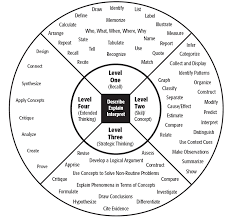
This page has a link to a Cognitive Rigor Matrix, which describes the DOK levels in more detail:
http://schools.nyc.gov/Academics/CommonCoreLibrary/ProfessionalLearning/DOK/default.htm
http://vimeo.com/42788913#
Here is a link to Webb's DOK Chart:
http://schools.nyc.gov/NR/rdonlyres/522E69CC-02E3-4871-BC48-BB575AA49E27/0/WebbsDOK.pdf
This page has a link to a Cognitive Rigor Matrix, which describes the DOK levels in more detail:
http://schools.nyc.gov/Academics/CommonCoreLibrary/ProfessionalLearning/DOK/default.htm
Teaching Channel Videos
The Teaching Channel has a lot of videos about the Common Core and best practices. This is a good place to start to introduce yourself to the CCSS. Here is a link to the videos specifically for elementary literacy:
https://www.teachingchannel.org/videos?page=1&categories=subjects_english-language-arts,grades_pre-k-2,topics_common-core&load=1
https://www.teachingchannel.org/videos?page=1&categories=subjects_english-language-arts,grades_pre-k-2,topics_common-core&load=1
NCTE Orbis Pictus Award for Outstanding Nonfiction for Children
The Orbis Pictus Award is a great resource for finding nonfiction text for the elementary classroom. These texts have the text complexity that the common core is looking for:
http://www.ncte.org/awards/orbispictus
http://www.ncte.org/awards/orbispictus
Reliable Nonfiction Authors
This is a list of reliable nonfiction authors (Thank you to Valerie Bang-Jensen). With the upcoming focus on nonfiction in the common core, it's important to choose more high-quality, high-interest nonfiction:
David Adler
Aliki
George Ancona
Jim Arnosky
Neil Ardley
Bryan Barton
Barbara Bash
Melvin Berger
Rhoda Blumberg
Franklyn Branley
Bruce Brooks
Lynn Cherry
Vicki Cobb
Joanna Cole
Penny Colman
Tomie DePaola
Barbara Esbenson
Margery Facklam
Leonard Everett Fisher
Russell Freedman
Jean Fritz
Jean Craighead George
Gail Gibbons
James Giblin
Ron and Nancy Goor
Brenda Guiberson
John Hackwell
Ron Hirschi
Tana Hoban
Diane Hoyt-Goldsmith
Steve Jenkins
Kathleen Krull
Joe Lasker
Kathryn Lasky
Patricia Lauber
Loreen leedy
Patricia McKissack
David Maccaulay
Hana Matchotka
Sandra Markle
Betsy Maestro
Faith McNulty
Milton Meltzer
Sy Montgomery
Ann Morris
Jim Murphy
Nancy Winslow Parker
Elizabeth Partridge
Dorothy Hinshaw Patent
April Pulley Sayre
Laurence Pringle
Doreen Rappaport
Anne Rockwell
Peter and Connie Roop
Joanne Ryder
Helen Roney Sattler
Judith St. George
Miriam Schlein
Elaine Scott
Millicent Selsam
Seymour Simon
Tanya Lee Stone
Andrea Warren
Robert E. Wells
ADDITIONAL RESOURCES:
David Adler
Aliki
George Ancona
Jim Arnosky
Neil Ardley
Bryan Barton
Barbara Bash
Melvin Berger
Rhoda Blumberg
Franklyn Branley
Bruce Brooks
Lynn Cherry
Vicki Cobb
Joanna Cole
Penny Colman
Tomie DePaola
Barbara Esbenson
Margery Facklam
Leonard Everett Fisher
Russell Freedman
Jean Fritz
Jean Craighead George
Gail Gibbons
James Giblin
Ron and Nancy Goor
Brenda Guiberson
John Hackwell
Ron Hirschi
Tana Hoban
Diane Hoyt-Goldsmith
Steve Jenkins
Kathleen Krull
Joe Lasker
Kathryn Lasky
Patricia Lauber
Loreen leedy
Patricia McKissack
David Maccaulay
Hana Matchotka
Sandra Markle
Betsy Maestro
Faith McNulty
Milton Meltzer
Sy Montgomery
Ann Morris
Jim Murphy
Nancy Winslow Parker
Elizabeth Partridge
Dorothy Hinshaw Patent
April Pulley Sayre
Laurence Pringle
Doreen Rappaport
Anne Rockwell
Peter and Connie Roop
Joanne Ryder
Helen Roney Sattler
Judith St. George
Miriam Schlein
Elaine Scott
Millicent Selsam
Seymour Simon
Tanya Lee Stone
Andrea Warren
Robert E. Wells
The “Let’s Read and Find Out” Series from Harper Collins (Crowell)
The “Read and Wonder” series from Candlewick Press.
See also Beverly Kobrin’s Eye Openers
Monday, April 29, 2013
Reading A to Z and the Common Core
For anyone who uses Reading A to Z, I just noticed that they have added Common Core Supplements to many of their books. Interestingly, they have rated their "Text Dependent Questions" based on Webb's Depth of Knowledge chart. On cursory glance of a few different resources, the ratings seem fairly reliable.
For example, the questions after Barack Obama's biography include the following:
For example, the questions after Barack Obama's biography include the following:
- Where was Barack Obama born (level 1)
- Why did Barack Obama live in so many different places? (level 2)
- Why did Barack Obama enter into politics? (level 2)
- Why was Barack Obama elected as president? (level 3)
Appendix C: Common Core Writing
What will the Common Core Writing Standards look like at each grade level you ask? Look no further: http://www.corestandards.org/assets/Appendix_C.pdf
Appendix B: Texts to Use and Questions to Ask
http://www.corestandards.org/assets/Appendix_B.pdf
Appendix B contains a list of texts that are appropriate for each grade level and example questions for students that align with the Core.
Common Core State Standards
The new Common Core Literacy Standards:
The common core has several instructional shifts
that teachers and teacher leaders will need to grapple with in the coming
years. The goal of the Common Core is to prepare our students to be successful
college students and members of our democratic society by emphasizing critical
thinking.
1. Increase in the amount of nonfiction text
used throughout the day
2. Increased depth of knowledge: Students are expected to “comprehend as well as
critique,” “value evidence,” “adapt their communication in relation to
audience, task, purpose, and discipline,” and “construct effective arguments
and convey intricate or multifaceted information” (p. 7).
3. Increase in the text complexity used in K-12 education (see Appendix A: http://www.corestandards.org/assets/Appendix_A.pdf)
4. More tier-2 vocabulary instruction
5. Increasing
persuasive and explanatory writing coupled with decreasing the amount of
narrative writing
6. Including literature from diverse cultures, traditional
literature, poetry, and drama
7. Approaching literacy in an interdisciplinary
manner
8. Integrating media literacy throughout the curriculum
9. Focusing on the
oral aspect of presenting knowledge
10. Integrating writing convention mastery
into literacy instruction
Literacy Assessments and Instructional Strategies
Here is a link to a description of literacy assessments and strategies appropriate for diagnostics and interventions in elementary school: https://docs.google.com/file/d/0ByliT-R9FortMWo2RFBLUXFfdjA/edit?usp=sharing
and secondary school: https://docs.google.com/file/d/0ByliT-R9FortTDNzbW1RdHlOZVU/edit?usp=sharing
I compiled these charts during my research at St. Mike's.
and secondary school: https://docs.google.com/file/d/0ByliT-R9FortTDNzbW1RdHlOZVU/edit?usp=sharing
I compiled these charts during my research at St. Mike's.
Myers Briggs Personality Test

Here is a link to a free Myers Briggs type test: http://www.humanmetrics.com/cgi-win/jtypes2.asp
and a description of the 16 types: http://www.humanmetrics.com/cgi-win/jtypes2.asp
Kise's Differentiated Coaching explains how these types affect approaches to coaching.
Differentiated Coaching
Differentiated Coaching helps teacher leaders to do just that: modify their coaching to meet the varying needs of colleagues. Jane Kise explains that coaches need, “A common framework that allows you to understand why teachers aren’t changing” (p. 2).” A common framework removes the personal nature of critique and suggestions for improvement and places the conversation on neutral ground revolving around the framework. Kise suggests the common framework of the Myers-Briggs Type Indicator. This framework can also facilitate a coach in understanding how teachers think and how they best respond to coaching (and helping teachers understand this for themselves) can lead to differentiated coaching that allows real change to occur.

Educational Leadership - Teachers as Leaders
This issue of Educational Leadership has a variety of articles about teacher leadership. Here are a few I found helpful:

http://www.ascd.org/publications/educational-leadership/sept07/vol65/num01/Overcoming-the-Obstacles-to-Leadership.aspx
http://www.ascd.org/publications/educational-leadership/sept07/vol65/num01/Overcoming-the-Obstacles-to-Leadership.aspx
In “Overcoming the Obstacles to
Leadership,” Johnson and Donaldson analyze the role of second-stage teachers (4
to 10 years experience) as leaders. Many teacher leaders face difficulty in
implementing true change in schools due to undefined roles and colleagues who
are unwelcome to help from teacher leaders due to age, less experience, and perceived
special treatment. Teacher leaders coped with these difficulties (and
marginalized their impact) by waiting to be recruited rather than volunteering,
working with only those teachers expressing a willingness to accept help, and
acting as a peer rather than an expert. Johnson and Donaldson stress that the
principal must support and define the role of teacher leaders in order to
improve schools.
http://www.ascd.org/publications/educational-leadership/sept07/vol65/num01/The-Many-Faces-of-Leadership.aspx
http://www.ascd.org/publications/educational-leadership/sept07/vol65/num01/The-Many-Faces-of-Leadership.aspx
Danielson outlines the various roles and opportunities for teacher leaders in “The Many Faces of Leadership.” Leaders can be formal, informal, within a department, school-wide, or community liaisons. Whatever their role, “Teacher leaders must enlist colleagues to support their vision, build consensus among diverse groups of educators, and convince others of the importance of what they are proposing and the feasibility of their general plan for improvement” (p. 16). A school culture of collaboration and risk-taking can support these leaders.
http://www.ascd.org/publications/educational-leadership/sept07/vol65/num01/Ten-Roles-for-Teacher-Leaders.aspx
http://www.ascd.org/publications/educational-leadership/sept07/vol65/num01/Ten-Roles-for-Teacher-Leaders.aspx
How are you leading? Ten different ways to lead.
http://www.ascd.org/publications/educational-leadership/sept07/vol65/num01/How-to-Talk-So-Teachers-Listen.aspx
In order for teacher leaders to be effective, colleagues must be willing and open to accept advice. Lipton and Wellman suggest a means for conducting effective conversations in “How to Talk So Teachers Listen.” Leaders should begin by focusing the conversation on a specific aspect of practice and student work. Coaching, consultative, and collaborative conversations should be interwoven with an emphasis on coaching. Using these three approaches empowers teachers and increases willingness to improve practice.
Link to the whole issue here: http://www.ascd.org/publications/educational-leadership/sept07/vol65/num01/toc.aspx
http://www.ascd.org/publications/educational-leadership/sept07/vol65/num01/How-to-Talk-So-Teachers-Listen.aspx
In order for teacher leaders to be effective, colleagues must be willing and open to accept advice. Lipton and Wellman suggest a means for conducting effective conversations in “How to Talk So Teachers Listen.” Leaders should begin by focusing the conversation on a specific aspect of practice and student work. Coaching, consultative, and collaborative conversations should be interwoven with an emphasis on coaching. Using these three approaches empowers teachers and increases willingness to improve practice.
Link to the whole issue here: http://www.ascd.org/publications/educational-leadership/sept07/vol65/num01/toc.aspx
Reflecting on the Teacher Leader Standards
This is an interesting post from someone who reflected on their own professional leadership practice based on the standards:
http://www.edweek.org/tm/articles/2012/06/19/tln_colucci_teacherleadership.html?tkn=WYWDa1YEGt2LmnnmLD3%2FIqd5yU0bIbswZzol&intc=es
Personally, I feel I am exhibiting portions of Domain II (Accessing and Using Research to Improve Practice and Student Learning) and IV (Facilitating Improvements in Instruction and Student Learning). Specifically, I am modeling portions of these domains in my own practice and sharing information with colleagues. At this point I am an informal teacher leader. I would also like to improve in Domain V, which is described as, “The teacher leader is knowledgeable about current research on classroom- and school-based data and the design and selection of appropriate formative and summative assessment methods” (p.18).
http://www.edweek.org/tm/articles/2012/06/19/tln_colucci_teacherleadership.html?tkn=WYWDa1YEGt2LmnnmLD3%2FIqd5yU0bIbswZzol&intc=es
Personally, I feel I am exhibiting portions of Domain II (Accessing and Using Research to Improve Practice and Student Learning) and IV (Facilitating Improvements in Instruction and Student Learning). Specifically, I am modeling portions of these domains in my own practice and sharing information with colleagues. At this point I am an informal teacher leader. I would also like to improve in Domain V, which is described as, “The teacher leader is knowledgeable about current research on classroom- and school-based data and the design and selection of appropriate formative and summative assessment methods” (p.18).
Teacher Leader Model Standards

http://www.teacherleaderstandards.org/
Coaching Conversations
Subscribe to:
Posts (Atom)